Sunday, June 26, 2011

The cook, the thief, his wife and her lover


"Greenaway's point is that beneath the thin veneer of civilization — lovely art objects, fine clothes, gourmet food, and classic literature — our insatiable appetites for cruelty, violence, racism, and power keep us slathering at the level of beasts." 

Touche! Indeed every audience who can make it to the end of "The cook, the thief, his wife and her lover" (1989)–– directed by Peter Greenaway––can share this critical reflection on humanity and civilization. It is bloody violent and disgustingly gruesome, yet very symbolic of the ugliness and savages of our times. Unlike "Eat Drink Man Woman"(飲食男女), or "Like Water for Chocolate" (Como Agua Para Chocolate), food in this movie is not laden with sensational feelings or heart-felt love. Depicted with gluttony, excessive forces, decaying worms, rotting corpses, scatological torture....food and the space around it convey everything but love, dignity and respect. Every corners associated with "food" in this movie are decorated with darkness: the dining hall is bloody red; the spacious kitchen is gloomy black; the parking lot is stuffed with stray dogs and maggoty animal parts dropping from the trucks. In contrast, the washrooms are bleachingly white; the yellowish bookstore is piled with books and lit with a romantic aura. But the sad thing––and I think this is what Greenaway wants to deliver–––is that these good and pretty spaces are indefensible against the violent invasion of the scoundrels. Washroom-users, irrespective of the sexes, were constantly harassed by Albert, the wretched, ignorant, impotent and barbaric gang leader, who brutally abused everyone around him. Before he was shot by his wife, he was forced to gorge down the "delicacy" prepared by the cook, witnessed by the mass who was abused by him. Is this justice? revenge? revolution? or overcoming violence with the ultimate form of violence––the cannibalistic denial of humanity? 

Nevertheless, this is a brilliantly presented film which challenges the visual acceptability of slaughter and moral acceptability of the suffering of the others. The morally repugnant pictures provoke us to rethink the unbridled greed, barbarous fierce and intense brutality in this ultra-materialistic, over-consuming world. 

Friday, June 24, 2011

楊雄《太玄經》

摘自《解嘲》
知玄知默
守倒之極
愛清愛靜
游神之延
惟寂惟莫
守德之宅
世異事變
人道不殊
彼我易時
未知何如

"An Antidote to Ridicule" Yang Xiong
Thus
Knowing mystery knowing silence
Keeping to the middle way of the Tao
Through purity, stillness
Roaming the palaces of the gods
Through solitude, quiet
Guarding the mansions of virtue
Times differ, circumstances change
The Way of man never varies
Exchanging time and position
The result is unknown

Tuesday, June 14, 2011

The illusion of "home" in HK

Next time you are tempted to buy an overpriced, overcrowded, over-packaged 500 sq. ft. apartment as your "home", remember this:

Perpetuating the illusion of "home" is big business for real estate developers. They have stretched the boundaries of the private house to absorb the public in a collective realm. The private sector clearly manipulates the social patterns of Hong Kong, making the one child family a model for sophisticated living. The fashionable vertical living environment, with its cloned family stereotype, functions as a mechanism of consumer society offering a standard product with remarkable packaging to justify its exorbitant price. Insufficient land and mass production are "real" real estate issues.


 It is a collective fantasy to imprison us in a pretty dream of a "safe", "sweet", and "warm" home. If such a dream can be purchased with 100 thousand HK dollar downpayment, and several thousand monthly mortgage until retirement, how much does a "dream" worth?

Sunday, June 12, 2011

Trilogy of Wong Kar-Wai 2

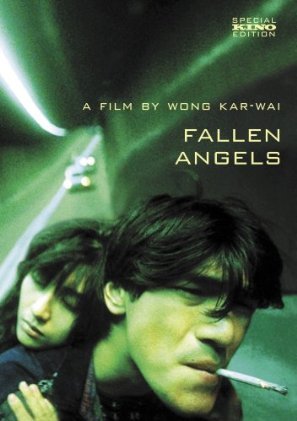
"Fallen Angels" (墮落天使) (1995),a movie depicting a set of interlocking and morbid relationships between people from different walks of lives. The leitmotif and many scenes are reminiscent of another Wong's production in 1994, ChungKing Express. The similarity between FA and CE was nicely summarized here.

 There are two major axes of relationship, that between the killer Leon Lai, his work partner Michelle Reis and the call girl Karen Mok , and between the mute boy Takeshi Kaneshiro and the heart-broken Charlie Yeung. A highly deterministic macro- atmosphere underlined the backdrop of this film. Leon worked as a hitman because he "doesn't have to make decisions". Who lives and who dies were pre-arranged for him by Michelle.  He is an executioner, not an executive or a judge. Takeshi was mute since childhood from food poisoning. He likes to barge into closed stores at nighttime to assume the role of the boss. Many comedic moments resulted from his repetitive coincidences with his "customers", yet his illicit lifestyle also shows his passivity to engage in pre-determined, pre-existing business without his own idiosyncrasy and decisions. Charlie was a desperate girl seeking out this "blondie" girl whom she believed to have stolen her boyfriend from her. Unable to extricate herself from an unrequited relationship, Takeshi discerned that Charlie was still in love with her boyfriend after some years apart. Karen was a paroxysmal ex-con indulging in one-night stands with Leo. Her desire "to be remembered" speaks to a flawed self-image that hinges on external appraisal for self-salvation. Consider the release date of the film, one possible reading is that the suffocating urban life and air reflects the mood of the impending reversion of sovereignty to People's Republic of China in 1997. Insinuating the inability and futility to make decisions and life choices, FA seems to imply that the future of HK is as uncertain and vain as the fate of the actors in the film.

A slit of silver lining is projected in the end of the movie, where Leo finally understands that he has to make decisions for himself before it is too late. Takeshi made a decision not to chase after Charlie as he found out that Charlie did not recognize him at all. Finally, the camera portrayed a close-up of Michelle, widely known as probably the prettiest Ms. HK. Her icy cold mood and ruminating look contrasted the hustling environ in the tea restaurant. She ran into Takeshi, who offered to take her home on his motorbike. Racing through an underground tunnel with her hair fluttering in the wind, she held onto Takeshi, and she confessed
"I haven't ridden a motorcycle for a long time. Actually, I haven't been so close to a man for a while. The road isn't that long, and I know I'm getting off soon. But I'm feeling such warmth this very moment."
 Urban fairy tales are fairly transient, but realizing ephemerality does not stop Michelle from enjoying the very breathing moment with a strange man.

Friday, June 10, 2011

Trilogy of Wong Kar-Wai 1

Wikipedia characterized the style of the award-winning HK director, Wong Kar Wai, in this way, "elliptically plotted mood pieces, with lush visuals and music, about the burden of memory on melancholic, misfit characters." Indeed, his movies are rich with metaphorical tropes, visual contrasts, and emotional subtlety. He is a master of the graphic representation of modern solitude, the emotional outcry of urbanites, and above all the social ambiguity and cultural juxtaposition of a society in flux.

"Days of Being Wild" (1990) (阿飛正傳) tells the story of a playboy whose failure to commit to any women stems from his familial history. Played by Leslie Cheung, he mastered the art of stealing girls' hearts with his artful lies ("I will remember you forever because of this minute") and his grasp of female psychological weaknesses. His womanizing capacity draws upon his troubled relationship with his adoptive mother who was a prostitute. Speaking with fluent Shanghainess and a set of typified fashion code of 50s/60s Shanghai, his adoptive mother was paid by his biological mother––a Filipino aristocrat––not to reveal her identity, much to the resentment of Leslie. His adoptive mother was engaged in bad romances with young men who approached her for her money. There is an important parallel between Leslie's treatment of his girlfriends (played by Maggie Cheung and Carina Lau) and his distaste of his adoptive mother. He saw how blind and self-deluding his adoptive mother was in bad romances, and he reconstructed these abusive relationships with other women (when Carina was desperately looking for Leslie as he left her, she unabashedly barged in the apartment of Leslie's adoptive mother. Carina asked if she was pathetic, the mother said "No, I was just like you when I was your age.") No matter how conceited he seemed to be in this hedonistic lifestyle, I think there's a part of him that knows something is wrong. The most revealing scene is the last moment before he was shot in a train in the Philippines in which the allegory of the flying birds without legs appeared again. As the core metaphorical thread weaving across the fabric of the film, the fable narrates the myth of a certain type of birds who are born without legs; incessant flying is necessary to keep them alive and the only instance of landing is the time they die. Leslie glorified this fable in the beginning of the movie, implying that his frivolous personality is as innate as this type of birds; standing in sharp contrast to his reflection on the allegory in his final breathing second, "I was wrong. The bird was dead from the start." Depriving of the ability of love, life is inane and hollow.

To be continued with "Fall Angels" (1995) and "Happy Together" (1997) in the next two posts.

Monday, June 6, 2011

Understanding and sympathy

"People who sympathize with us but do not understand us are naturally our good friends, especially during times of tribulation; while the words of those who understand us but do not sympathize with us deserve our special attention. The most precious, however, are those who both understand and sympathize with us, especially if their sympathy comes from their understanding." Fu Sinian 

Saturday, May 28, 2011

How I come to love Proust


Virginia Woolf once said “My great adventure is really Proust.  Well — what remains to be written after that?” I am not going to pretend that I am an expert on Proust. French literature is never my strength. I had my first passing encounter with "In Search of Lost Time" in my all-time favorite movie "Love Letter" directed by Iwaii Shunji. It was a fleeting moment on the screen, but the book is the symbolic underpinning of the whole story (click here for a synopsis of the movie). 

I always want to get to know the nuts and bolts that make my favorite movie so divinely presented. I downloaded the first volume of ISLT–Swann's way–for free on kindle last month. I finished reading it and now I understand Woolf's compliment, as least insofar as the first volume is concerned. It is a quasi-autobiography of Proust's ill-stricken life where he spent most of the time in his uncle's residence in a fictional town called "Combray". It is not a novel with billowing plots and thrilling scenes and extraordinary characters. The majority of the body is about his perception of the world beholds him and description of natural landscapes. Proust's sensitivity and unparalleled textual mastery exudes from his captivating descriptive narratives. He captures the inner world of emotion for an introvert and a bibliophile. Reading him is reassuring, therapeutic and socially elevating because I feel that I am not alone. Some of the favorite excerpts from Swann's Way: 

"no one perhaps could have understood my feelings at that moment so well as he; to him, the anguish that comes from knowing that the creature one adores is in some place of enjoyment where oneself is not and cannot follow—to him that anguish came through love, to which it is in a sense predestined, by which it will be seized upon and exploited; but when, as had befallen me, it possesses one’s soul before love has yet entered into one’s life..."

“A book is the product of a different self from the one we manifest in our habits, in society, in our vices. If we mean to try to understand this self it is only in our inmost depths, by endeavoring to reconstruct it there, that the quest can be achieved.”

"These shifting and confused gusts of memory never lasted for more than a few seconds; it often happened that, in my brief spell of uncertainty as to where I was, I did not distinguish the various suppositions of which it was composed any more than, when we watch a horse running, we isolate the successive positions of its body as they appear upon a bioscopy."

"even in the most insignificant details of our daily life, none of us can be said to constitute a material whole, which is identical for everyone, and need only be turned up like a page in an account-book or the record of a will; our social personality is a creation of the thoughts of other people."

"And so it is with our own past. It is a labour in vain to attempt to recapture it: all the efforts of our intellect must prove futile. The past is hidden somewhere outside the realm, beyond the reach of intellect, in some material object (in the sensation which that material object will give us) of which we have no inkling. And it depends on chance whether or not we come upon this object before we ourselves must die."

"it is only with the passions of others that we are ever really familiar, and what we come to discover about our own can only be learned from them."