Thursday, May 2, 2013

Reflection on HK's new formula for milk formula


A few weeks ago the SCMP editorial lobbied for a 'New Formula for Milk Formula' (Mar 29, 2013) to address the so-called 'formula shortage' in Hong Kong. The formula crisis was reduced to a violation of the law of demand and supply. Backed by this economic principle, hysterical parents joined the anti-Chinese sects in blaming mainlanders and cross-border traders for causing the milk scarcity. The discourse on infant formula threw the city into a frenzy of Sinophobic rage.

Yet the suppliers of the baby formula did not comment on the shortage until their businesses were imperiled by the two-can export quota. This time, the seven manufacturers pledge a vow on steady supply in concert with the General Chamber of Pharmacy. ('Baby Milk Formula Producers Plan to End Export Restrictions' dated April 26, 2013) I couldn’t help but wonder: where were these people a few months ago? When local mothers were painfully scouting around for your products, where were you? What did you do to sooth your customers?  

When the media spotlight is disproportionately put on the demand factor, does anyone ever cast doubt on the business ethics of these suppliers? Shouldn’t the suppliers share some of the responsibilities for causing the social unrest? After all, market equilibrium is a two-way street. When Hong Kong people indulge themselves in trashing mainlanders and the stereotypically corrupted Chinese government, does (has) any self-respected Hong Kong citizen ever reflect(ed) on the corporate greed that is endemic in this city? 

In the Pulitzer and Nobel Prize-winning novel ‘The Grapes of Wrath,’ John Steinbeck depicted the gripping scene in which people starved even when the supply of crops was abundant because the growers dumped the crops into the river to keep the price up. Steinbeck held the covetous farmers responsible for causing the plight of the poor and hungry during the Great Depression. In the twenty-first century Hong Kong, are we still experiencing the purposeful destruction or hoarding of milk powder to keep the price high? 

It’s time to reflect on who is the real culprit behind this incident. We will return to the dark age where there is a growing wrath among the adults if social justice is not restored.

Sunday, August 21, 2011

變質的杯麵

我家的廚櫃上自2008年聖誕節起放著一個自制的杯麵,這個杯麵是我和前男友最後一次出外旅遊的紀念品。話說在日本關西地區有一個杯麵博物館 (Ramen Museum),參觀者可以自己親手操作機械裝麵,選擇調味料,封口,和在杯上塗鴉裝飾。這個DIY杯麵做好後就一直放在廚櫃上,沒有人理會其象徵意義,沒有人去在意它的有效日期,更沒有人預料原來它見證著一段感情的變質。


回港的第一個晚上就發現這個杯麵,塑膠杯面畫上“love forever"和製造日期(2008年12月25日),當時心想年輕人的感情保質期還不如即食食品!剛剛心血來潮,揭開封口,一陣瘴氣撲鼻,原來裡面的配料早就發霉,可能是沒有完全密封,又或是香港氣候太潮濕,反正這個麵早已經過了保質期。

再仔細觀察,無論是杯身,封面,或聚乙烯包裝膠上,都沒有寫上明確的保質期。大概製造商早就預料人們不會真的去吃這個紀念性的杯麵,所以也沒有刻意指明有效日期。我早前以為和 "We are what we eat" 這句名言一樣––“modern relationships are like modern comestibles"––其實啊,不是所有的現代戀情都像即棄食物一樣,關鍵是先要弄清楚,你手上捧著的是甚麼性質的杯麵。DIY紀念性質的杯麵建立在 “意義深重”的假設上,因為太重要,所以不會想去開封檢驗品質。越是太在乎,不捨得親手毀掉,保質期越是沒有保證。

Sunday, June 26, 2011

The cook, the thief, his wife and her lover


"Greenaway's point is that beneath the thin veneer of civilization — lovely art objects, fine clothes, gourmet food, and classic literature — our insatiable appetites for cruelty, violence, racism, and power keep us slathering at the level of beasts." 

Touche! Indeed every audience who can make it to the end of "The cook, the thief, his wife and her lover" (1989)–– directed by Peter Greenaway––can share this critical reflection on humanity and civilization. It is bloody violent and disgustingly gruesome, yet very symbolic of the ugliness and savages of our times. Unlike "Eat Drink Man Woman"(飲食男女), or "Like Water for Chocolate" (Como Agua Para Chocolate), food in this movie is not laden with sensational feelings or heart-felt love. Depicted with gluttony, excessive forces, decaying worms, rotting corpses, scatological torture....food and the space around it convey everything but love, dignity and respect. Every corners associated with "food" in this movie are decorated with darkness: the dining hall is bloody red; the spacious kitchen is gloomy black; the parking lot is stuffed with stray dogs and maggoty animal parts dropping from the trucks. In contrast, the washrooms are bleachingly white; the yellowish bookstore is piled with books and lit with a romantic aura. But the sad thing––and I think this is what Greenaway wants to deliver–––is that these good and pretty spaces are indefensible against the violent invasion of the scoundrels. Washroom-users, irrespective of the sexes, were constantly harassed by Albert, the wretched, ignorant, impotent and barbaric gang leader, who brutally abused everyone around him. Before he was shot by his wife, he was forced to gorge down the "delicacy" prepared by the cook, witnessed by the mass who was abused by him. Is this justice? revenge? revolution? or overcoming violence with the ultimate form of violence––the cannibalistic denial of humanity? 

Nevertheless, this is a brilliantly presented film which challenges the visual acceptability of slaughter and moral acceptability of the suffering of the others. The morally repugnant pictures provoke us to rethink the unbridled greed, barbarous fierce and intense brutality in this ultra-materialistic, over-consuming world. 

Friday, June 24, 2011

楊雄《太玄經》

摘自《解嘲》
知玄知默
守倒之極
愛清愛靜
游神之延
惟寂惟莫
守德之宅
世異事變
人道不殊
彼我易時
未知何如

"An Antidote to Ridicule" Yang Xiong
Thus
Knowing mystery knowing silence
Keeping to the middle way of the Tao
Through purity, stillness
Roaming the palaces of the gods
Through solitude, quiet
Guarding the mansions of virtue
Times differ, circumstances change
The Way of man never varies
Exchanging time and position
The result is unknown

Tuesday, June 14, 2011

The illusion of "home" in HK

Next time you are tempted to buy an overpriced, overcrowded, over-packaged 500 sq. ft. apartment as your "home", remember this:

Perpetuating the illusion of "home" is big business for real estate developers. They have stretched the boundaries of the private house to absorb the public in a collective realm. The private sector clearly manipulates the social patterns of Hong Kong, making the one child family a model for sophisticated living. The fashionable vertical living environment, with its cloned family stereotype, functions as a mechanism of consumer society offering a standard product with remarkable packaging to justify its exorbitant price. Insufficient land and mass production are "real" real estate issues.


 It is a collective fantasy to imprison us in a pretty dream of a "safe", "sweet", and "warm" home. If such a dream can be purchased with 100 thousand HK dollar downpayment, and several thousand monthly mortgage until retirement, how much does a "dream" worth?

Sunday, June 12, 2011

Trilogy of Wong Kar-Wai 2

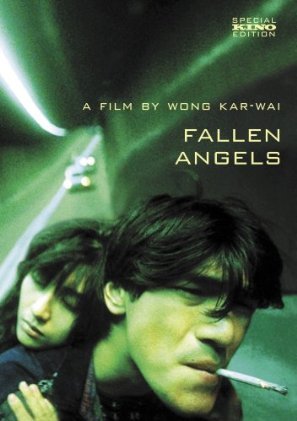
"Fallen Angels" (墮落天使) (1995),a movie depicting a set of interlocking and morbid relationships between people from different walks of lives. The leitmotif and many scenes are reminiscent of another Wong's production in 1994, ChungKing Express. The similarity between FA and CE was nicely summarized here.

 There are two major axes of relationship, that between the killer Leon Lai, his work partner Michelle Reis and the call girl Karen Mok , and between the mute boy Takeshi Kaneshiro and the heart-broken Charlie Yeung. A highly deterministic macro- atmosphere underlined the backdrop of this film. Leon worked as a hitman because he "doesn't have to make decisions". Who lives and who dies were pre-arranged for him by Michelle.  He is an executioner, not an executive or a judge. Takeshi was mute since childhood from food poisoning. He likes to barge into closed stores at nighttime to assume the role of the boss. Many comedic moments resulted from his repetitive coincidences with his "customers", yet his illicit lifestyle also shows his passivity to engage in pre-determined, pre-existing business without his own idiosyncrasy and decisions. Charlie was a desperate girl seeking out this "blondie" girl whom she believed to have stolen her boyfriend from her. Unable to extricate herself from an unrequited relationship, Takeshi discerned that Charlie was still in love with her boyfriend after some years apart. Karen was a paroxysmal ex-con indulging in one-night stands with Leo. Her desire "to be remembered" speaks to a flawed self-image that hinges on external appraisal for self-salvation. Consider the release date of the film, one possible reading is that the suffocating urban life and air reflects the mood of the impending reversion of sovereignty to People's Republic of China in 1997. Insinuating the inability and futility to make decisions and life choices, FA seems to imply that the future of HK is as uncertain and vain as the fate of the actors in the film.

A slit of silver lining is projected in the end of the movie, where Leo finally understands that he has to make decisions for himself before it is too late. Takeshi made a decision not to chase after Charlie as he found out that Charlie did not recognize him at all. Finally, the camera portrayed a close-up of Michelle, widely known as probably the prettiest Ms. HK. Her icy cold mood and ruminating look contrasted the hustling environ in the tea restaurant. She ran into Takeshi, who offered to take her home on his motorbike. Racing through an underground tunnel with her hair fluttering in the wind, she held onto Takeshi, and she confessed
"I haven't ridden a motorcycle for a long time. Actually, I haven't been so close to a man for a while. The road isn't that long, and I know I'm getting off soon. But I'm feeling such warmth this very moment."
 Urban fairy tales are fairly transient, but realizing ephemerality does not stop Michelle from enjoying the very breathing moment with a strange man.